Our department provide various programs from Bachelor’s to Doctoral degree.
How do you make organizations work better?
Industrial engineers figure it out!
As Industrial engineers, we apply engineering principles and data-driven analysis to optimize complex systems, processes, and operations across manufacturing, healthcare, logistics, finance, and service industries. We identify inefficiencies and design improvements in production workflows, supply chains, resource management, and scheduling—using tools from statistics, operations research, and systems thinking to make organizations faster, safer, and more sustainable. Our work is essential because small improvements compound into significant cost savings, quality gains, and environmental benefits, and industrial engineering has become increasingly critical in today’s world: digital transformation, sustainability imperatives, supply chain disruptions, and the rise of analytics have made systematic process improvement a competitive necessity for organizations adapting to rapid change.
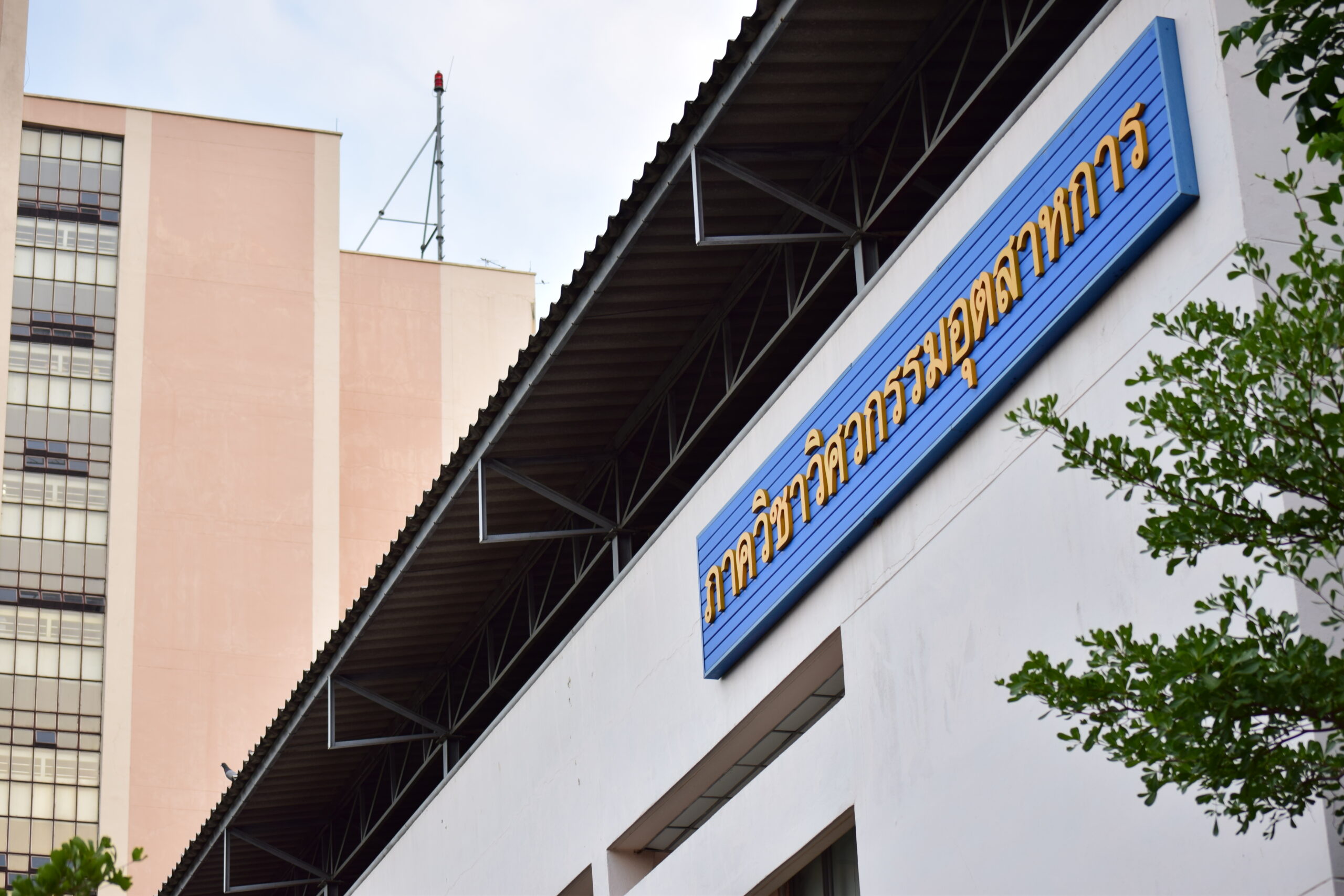
Located just on the eastern side of Bangkok, next to Suvarnabhumi airport, the Department of Industrial Engineering (IE) is one of the fourteen engineering departments at King Mongkut’s Institute of Technology Ladkrabang (KMITL). The original Industrial Engineering program at KMITL was first established in 1995 as a specialization within the Department of Mechanical Engineering. Later in 1997, the IE program became its own independent department, forming the Department of Industrial Engineering at KMITL. Within the same year, the program was also accredited by the Council of Engineers Thailand. Several programs with a variety of specializations were later introduced, including the Master’s program (started in 2006) and Doctoral program (started in 2013) in Industrial Engineering, designed to suit the needs of industrial engineers for Thai industries and provide necessary education at all levels.
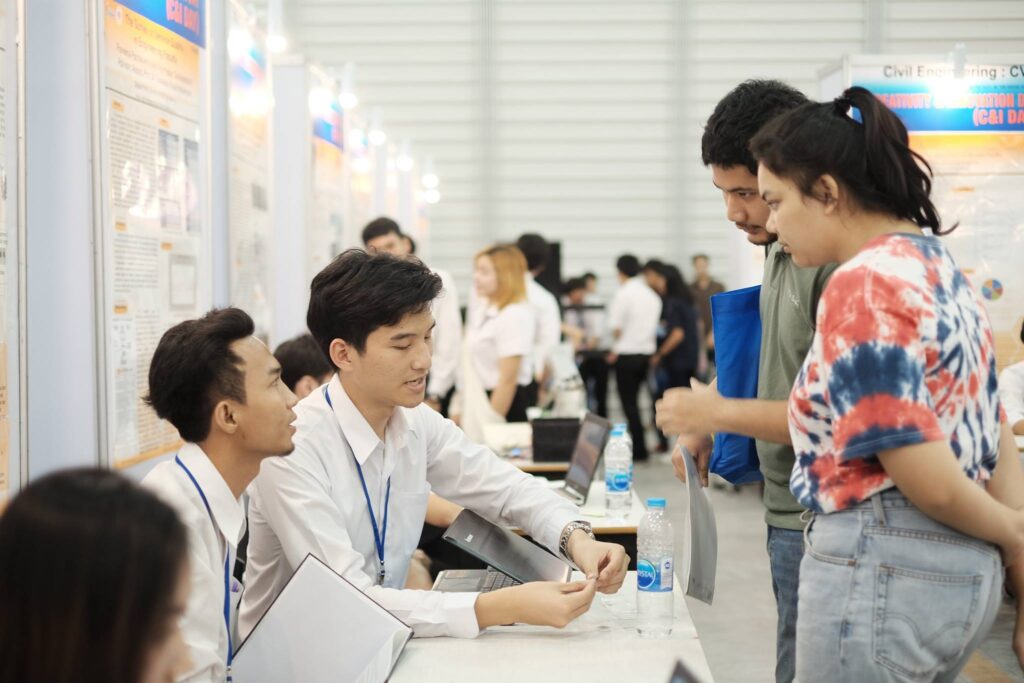
To date, our department has produced thousands of successful engineers who have helped push the boundaries of Thai industry and contributed to global innovation. To ensure the success of our graduates, we educate students in the fundamentals of industrial engineering, engage them in hands-on engineering design and innovation, and keep class sizes manageable with a student-to-faculty ratio of 17:1. We also expose students to real-world problems through cooperative education opportunities. To uphold the highest quality standards across our programs, we employ systematic quality control measures and hold ABET accreditation (IELM program).